
Mitosis vs. Meiosis
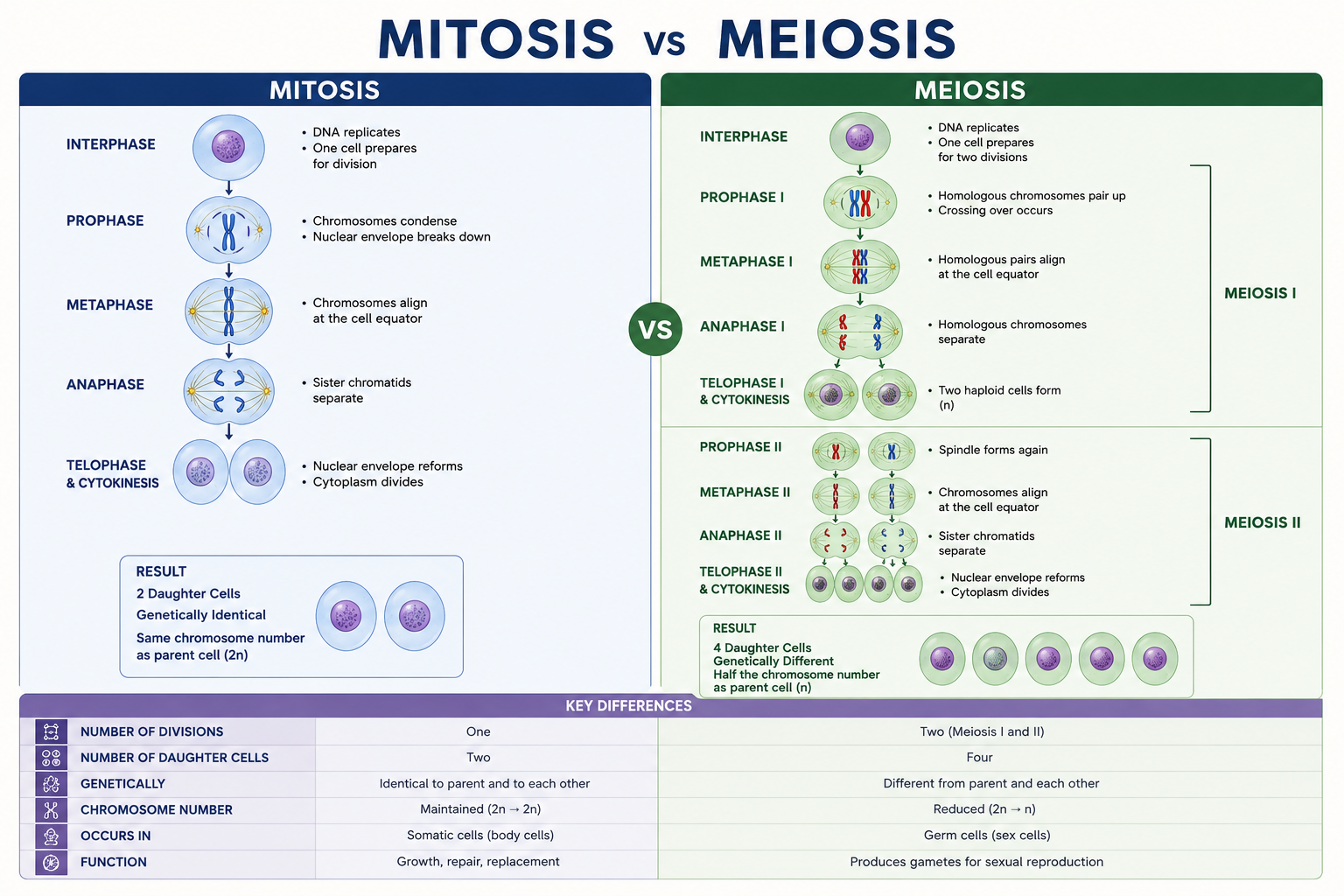
Cell division is one of the most important processes in biology because it allows organisms to grow, develop, repair damaged tissues, and reproduce. Two major types of nuclear division are mitosis and meiosis. Although both processes involve the duplication and distribution of genetic material, they have different purposes and produce different results. Mitosis is mainly associated with the growth and maintenance of an organism. It produces new cells that generally contain the same number of chromosomes as the original cell. Meiosis, in contrast, is associated with sexual reproduction and produces cells containing half the chromosome number of the original cell. In humans, for example, most body cells contain 46 chromosomes, whereas mature reproductive cells contain 23 chromosomes. Both processes begin after DNA has been replicated, but their division patterns are different. Mitosis involves one nuclear division and normally produces two daughter cells. Meiosis involves two successive nuclear divisions and normally produces four haploid cells. Meiosis also includes mechanisms such as crossing over and independent assortment, which contribute to genetic variation. These fundamental differences make mitosis and meiosis suitable for different biological functions.
